
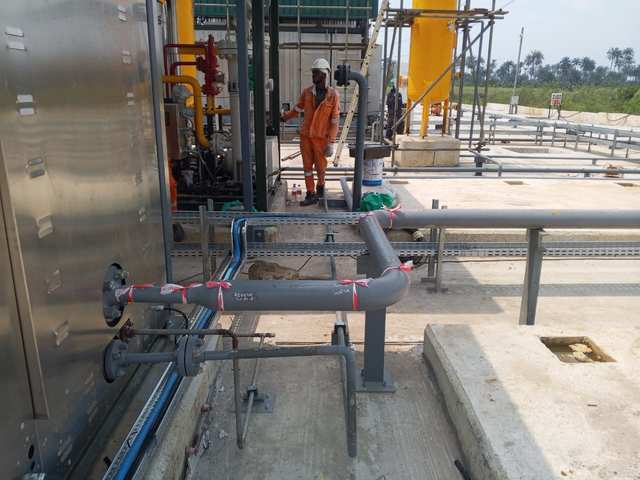
The Plant Inspection Nigeria Ltd. provides cathodic protection, a corrosion-control technique that uses direct electrical current to stop metal structures and equipment from oxidising. It improves safety and reliability, prevents equipment failure and extends asset life for pipelines, tanks and plant structures.
- Provider
- The Plant Inspection Nigeria Ltd.
- Based in
- Port Harcourt, Rivers State
- Serving
- Clients across Nigeria
- Quality
- ISO 9001:2015 certified
What is cathodic protection?
Cathodic protection controls corrosion in metal structures and equipment by using direct electrical current to prevent oxidation. It improves safety and reliability and is critical for preventing equipment failure and making assets last longer.
Protection is usually provided either by sacrificial (galvanic) anodes, which corrode in place of the structure, or by impressed current systems, which use a power source to drive protective current. The right choice depends on the structure, its environment and its size.


Assets that benefit
- Buried and submerged pipelines
- Storage tanks
- Plant piping
- Steel structures
- Marine and jetty steelwork
- Other metal equipment
Benefits
- Prevents corrosion damage
- Reduces risk of equipment failure
- Improves safety & reliability
- Extends asset life
Cathodic protection is also available through our industrial trading division. Corrosion knowledge is covered in our API 571 course.
Frequently asked questions
What is cathodic protection?
Cathodic protection is a corrosion-control method that applies direct electrical current to a metal structure so that it does not oxidise.
What can cathodic protection be used on?
Pipelines, storage tanks, plant piping, steel structures and other metal equipment exposed to soil or water.
Why is cathodic protection important?
It prevents corrosion-related failures, improves safety and reliability, and extends the life of assets.
Last updated:


